




Buying a metal deburring machine is not simply a matter of comparing machine prices.
Two factories may both manufacture laser-cut sheet metal parts but require completely different deburring solutions.
One factory may process thin stainless steel panels with very small burrs, while another handles thick carbon steel components with heavy slag.
The correct machine depends on the material, cutting process, burr size, part dimensions, desired edge radius, surface finish and production capacity.
This buyer’s guide explains what you should consider before choosing an automatic metal deburring machine.
First: Understand What You Need to Remove
Before comparing machines, inspect your workpieces.
What problem are you actually trying to solve?
Light Burrs
Small burrs commonly found on laser-cut or punched components can often be removed using an abrasive belt followed by an edge-rounding station.
Sharp Edges
If the burr itself is relatively small but the cut edge is too sharp, your main requirement may actually be edge rounding rather than aggressive material removal.
Heavy Slag
Plasma and flame-cut components may contain significantly heavier cutting residue.
These applications generally require a more aggressive first processing stage before edge rounding.
Oxide Layer
Thermal cutting can also leave oxide on certain cut edges.
If downstream welding or coating requires cleaner edges, oxide removal may need to be included in the process.
This distinction matters because deburring, edge rounding, heavy slag removal and oxide removal are related but different finishing processes. Industrial machines can combine several of these operations, but the configuration needs to match the actual workpiece.
Abrasive Belt + Rotary Brush: A Common Configuration
One of the most versatile configurations for a sheet metal deburring machine combines an abrasive belt with a rotary brush system.
The abrasive belt performs the initial grinding operation.
It can remove burrs and flatten unwanted projections before the part enters the next station.
The rotary brush then works around the contours of the component to round the edges.
This combination is particularly effective when manufacturers need both deburring and edge rounding in one automatic process.
Suggested Machine Image
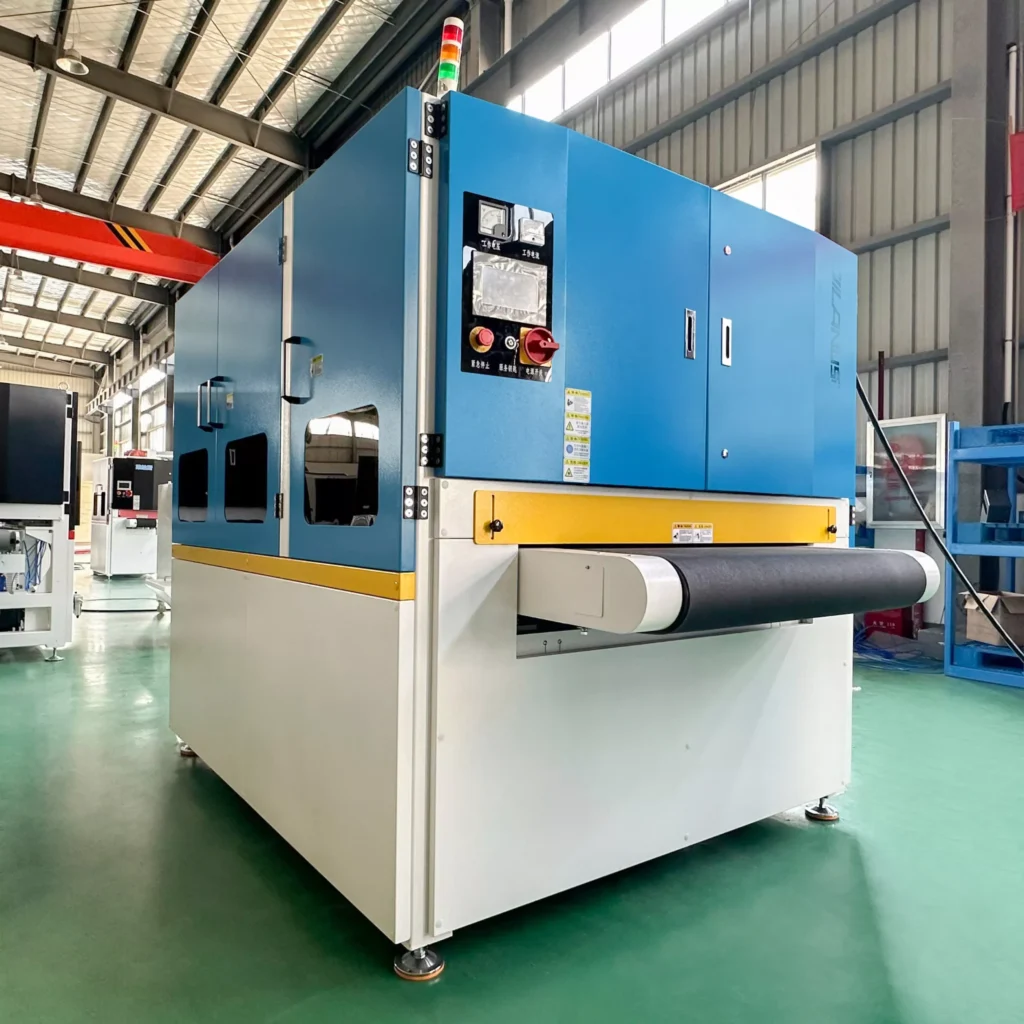
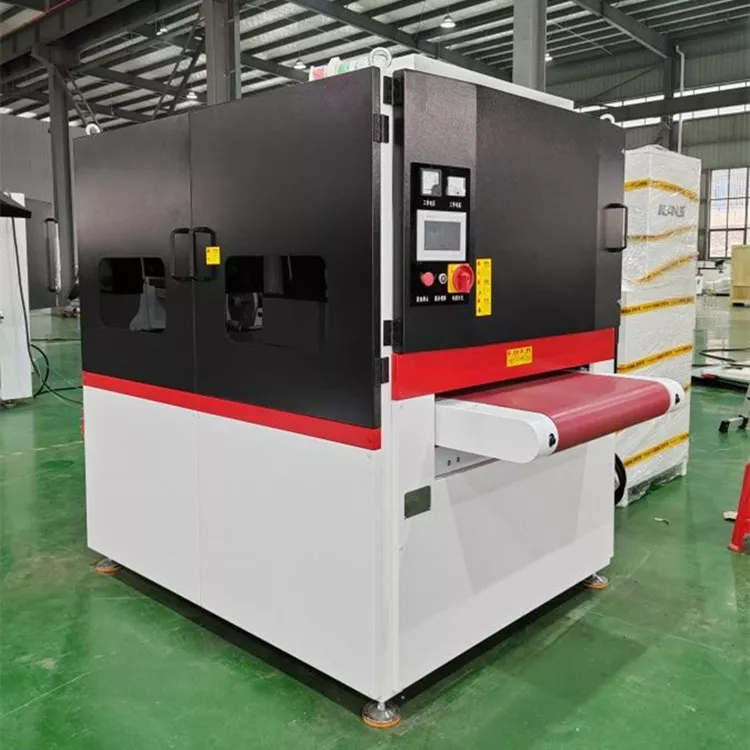
Image ALT: industrial metal deburring machine with abrasive belt and rotary brush
Choosing a Machine for Laser Cut Parts
If your factory primarily processes laser-cut parts, consider the size and severity of the burrs as well as the required edge quality.
A typical laser cutting deburring machine may use:
Wide abrasive belt → Rotary edge-rounding brush → Optional finishing station
This type of setup can process flat components continuously and is suitable for many sheet metal fabrication environments.
For complex laser-cut components containing multiple internal holes and contours, multi-directional brush contact becomes especially important because the machine needs to reach more than just the outside perimeter.
Choosing a Stainless Steel Deburring Machine
Stainless steel often requires attention to both edge quality and surface appearance.
If the parts are visible in the final product, aggressive grinding may remove the burr but leave an undesirable surface.
When selecting a stainless steel deburring machine, consider:
1. Burr removal requirements
Determine how much material actually needs to be removed.
2. Surface protection
If the sheet contains protective film or a finished visible surface, ask whether the machine configuration is suitable for processing it.
3. Desired finish
Some applications require only deburring, while others require a brushed or directional surface finish.
4. Edge radius
If parts will be painted, coated or frequently handled, you may need a defined edge-rounding result rather than simple burr removal.
Choosing an Aluminum Deburring Machine
Aluminum components are common in automotive, electronics, aerospace and general fabrication because of their low weight and machinability.
However, aluminum finishing requires an appropriate process setup.
An aluminum deburring machine should be configured with suitable abrasives and dust-management equipment for the application.
This is especially important because fine aluminum dust can present a combustion hazard, making appropriate dust extraction and fire-safety design an important consideration.
If you process both stainless steel and aluminum, tell the equipment supplier before selecting the machine so the full application and dust-control requirements can be evaluated.
How Much Working Width Do You Need?
Working width is one of the most important specifications when selecting a metal deburring machine.
The machine must accommodate the largest workpiece you expect to process.
Common industrial machines are available in multiple working widths, with current commercial systems spanning roughly 600 mm through 1,500+ mm depending on manufacturer and model.
Do not automatically purchase the widest machine available.
A larger machine normally requires more factory space, larger consumables and greater investment.
Instead, select a width based on your actual production mix while allowing reasonable room for future products.
Do You Need Edge Rounding?
Deburring and edge rounding are often discussed together, but they are not exactly the same process.
Deburring removes unwanted projections.
Edge rounding intentionally creates a smoother radius on the sharp edge.
For parts that workers frequently handle or that require coating, edge rounding may be particularly valuable.
Proper edge rounding can improve handling safety and can also support better coating coverage around metal edges.
Suggested Before/After Image
ALT: sheet metal edge before and after metal deburring machine
Automatic Metal Deburring Machine or Manual Deburring?
For a small fabrication shop processing occasional custom components, manual deburring may still be practical.
But as production volume increases, manual grinding can consume significant labor and create inconsistency between operators.
An automatic metal deburring machine is more suitable when you have:
- Repetitive production
- Large quantities of laser-cut parts
- Consistent edge-quality requirements
- Multiple operators currently performing manual grinding
- Bottlenecks between cutting and welding
- Increasing customer requirements for surface quality
The important question is not simply:
“How much does the machine cost?”
A better question is:
“How much manual finishing work can this machine replace or standardize within our production process?”
7 Questions to Ask Before Buying a Metal Deburring Machine
Before requesting a quotation, prepare the following information.
1. What material do you process?
Carbon steel, stainless steel, aluminum, copper or mixed materials?
2. How are your parts cut?
Laser, plasma, flame, punching, waterjet or shearing?
3. What is the maximum workpiece size?
4. What is the minimum and maximum material thickness?
5. What type of burr or slag needs to be removed?
6. Do you require edge rounding?
7. What surface finish do you expect after processing?
These factors are more useful for configuring a machine than simply asking for a generic metal deburring machine price.
Why Sample Testing Is Important
Before purchasing industrial deburring equipment, sample testing can help confirm whether the proposed machine configuration achieves the required result.
Send several representative parts rather than only your easiest workpiece.
Ideally, your sample set should include:
your smallest part, largest part, thinnest material, thickest material and a component with the most difficult burr condition.
After testing, evaluate:
- Burr removal
- Edge radius
- Surface scratches
- Internal contour processing
- Processing speed
- Consistency
- Consumable requirements
This gives both the buyer and machine supplier a much clearer basis for choosing the correct configuration.
Metal Deburring Machine Applications
Automatic deburring equipment is widely applicable across metalworking industries.
Typical applications include:
Sheet Metal Fabrication — laser-cut and punched panels.
Automotive Components — brackets, structural parts and metal assemblies.
Electrical Cabinets — enclosures, panels and internal components.
Industrial Machinery — machine covers, frames and structural components.
Kitchen Equipment — stainless steel components requiring smooth edges.
Elevator Manufacturing — stainless and fabricated sheet metal parts.
HVAC Manufacturing — sheet metal panels, brackets and housings.
Precision Fabrication — components requiring consistent edge quality.
Industrial machine manufacturers similarly list applications across sheet-metal processing, automotive, machinery, electronics, rail, medical and other fabrication sectors.
What Affects Metal Deburring Machine Price?
The price of a metal deburring machine varies according to its size and configuration.
Important factors include working width, number of processing stations, abrasive-belt configuration, brush system, motor power, conveyor system, control system, dust extraction requirements and optional automation.
Therefore, comparing machines only by price can be misleading.
A lower-cost machine that cannot achieve your required edge quality or production speed may create additional finishing work later.
The best way to receive an accurate quotation is to provide the supplier with actual workpiece information.
Request a Metal Deburring Machine Recommendation
Every factory has different workpieces.
Instead of choosing a machine based only on a catalog specification, start with your actual parts.
Send us:
Material: Stainless Steel / Carbon Steel / Aluminum / Other
Part Size: ___ × ___ mm
Thickness: ___ mm
Cutting Method: Laser / Plasma / Punching / Other
Required Process: Deburring / Edge Rounding / Slag Removal / Surface Finishing
Production Capacity: ___ pcs/day
Our engineers can evaluate your application and recommend a suitable metal deburring machine configuration.
CTA: GET A MACHINE RECOMMENDATION
CTA: REQUEST A QUOTE