




In modern metal fabrication, cutting is only the beginning of the production process. Laser cutting, plasma cutting, punching, shearing and other machining processes can leave sharp edges, burrs, slag and oxide layers on metal parts.
These imperfections may look small, but they can create significant problems during welding, coating, assembly and final product handling.
A metal deburring machine provides an efficient way to remove unwanted burrs and improve the edges and surfaces of metal components automatically.
Compared with manual grinding, an automatic metal deburring machine can process large quantities of parts with more consistent results while reducing the amount of repetitive manual finishing work required.
For manufacturers processing carbon steel, stainless steel, aluminum and other sheet metal materials, automated deburring has become an important part of an efficient finishing line.
Suggested Image 1 – Metal Deburring Machine
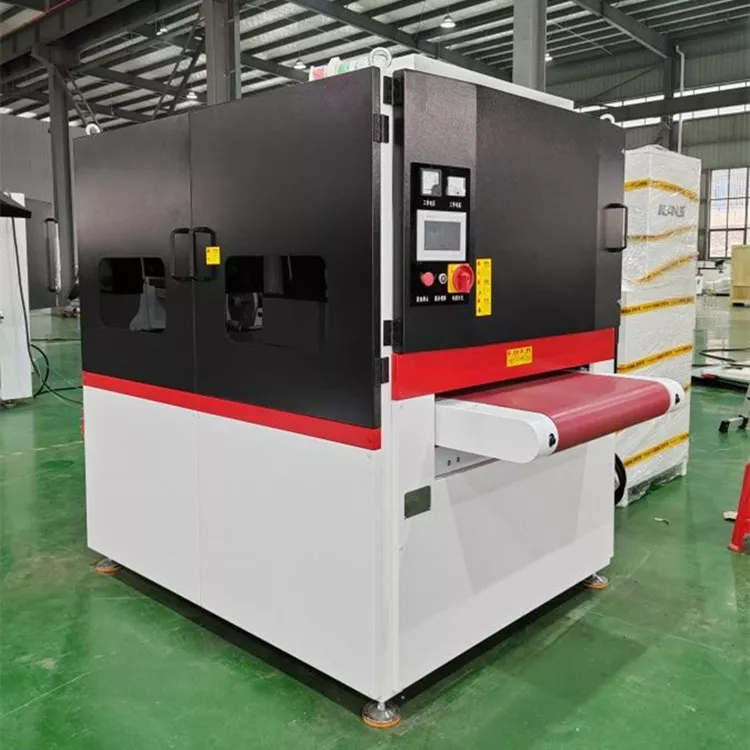
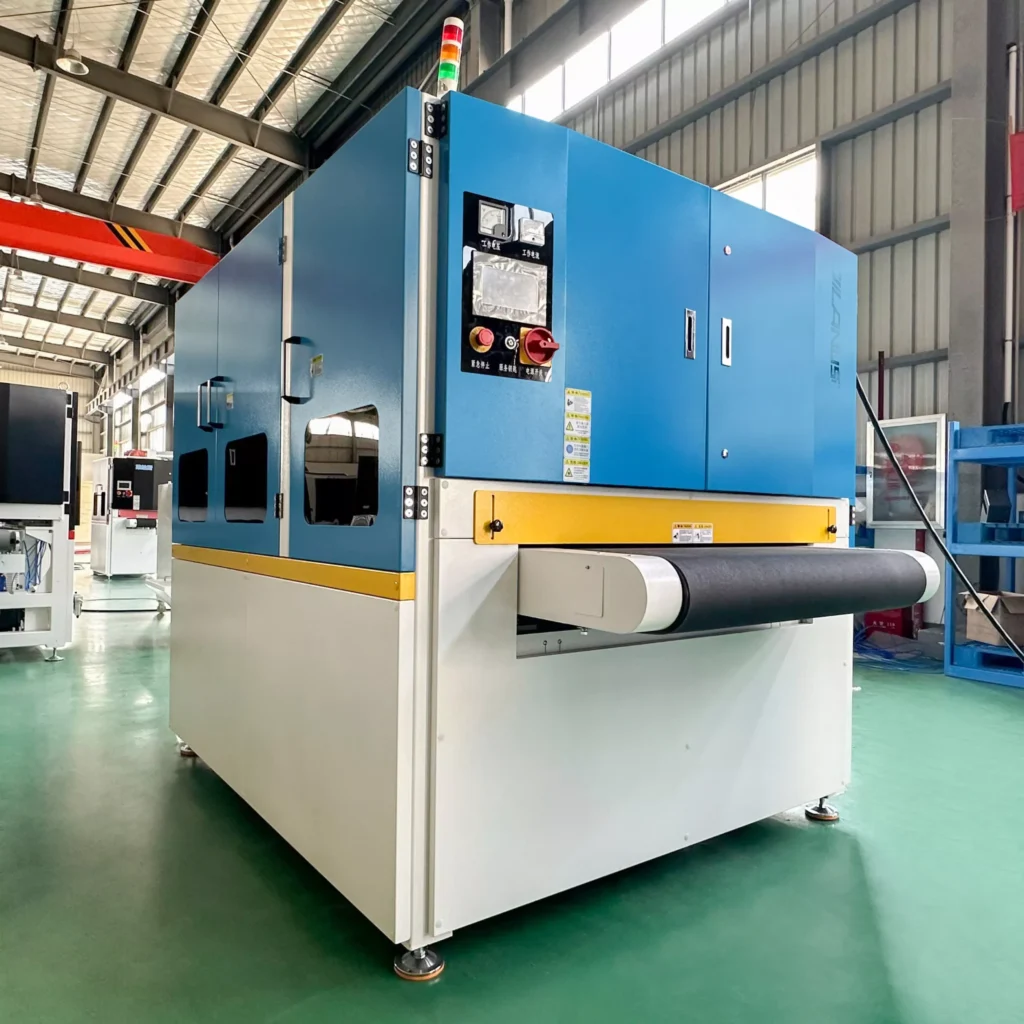
Recommended ALT text: automatic metal deburring machine for sheet metal finishing
What Is a Metal Deburring Machine?
A metal deburring machine is industrial finishing equipment designed to remove burrs and sharp edges created during metal cutting or machining.
Depending on the machine configuration, it can perform several operations, including:
- Burr removal
- Edge rounding
- Heavy slag removal
- Laser oxide removal
- Surface grinding
- Brushing and finishing
- Rust and scale removal
- Surface preparation before coating or painting
Modern automatic metal deburring machines commonly combine abrasive belts with rotating brushes or other finishing units.
The abrasive belt removes larger burrs, slag and surface imperfections, while rotary brushes can process external edges, internal contours and holes to produce smoother and more consistent edge rounding. This belt-and-brush approach is widely used in current sheet-metal deburring systems.
Why Do Metal Parts Need Deburring?
Burrs are small raised or sharp pieces of material that remain on a workpiece after cutting, punching, drilling or machining.
For example, after laser cutting a sheet metal component, the part may have sharp lower edges, small burrs or thermal cutting residue.
Leaving these defects untreated can create several problems.
1. Safer Handling
Sharp metal edges can create a risk of cuts during handling, assembly and installation.
Edge rounding removes these sharp corners and produces a smoother edge that is safer for operators and downstream workers.
2. Better Coating Quality
Sharp edges can also affect painting and powder coating.
Rounded edges provide a more suitable geometry for coating coverage compared with extremely sharp cut edges. This is one reason edge rounding is commonly performed before painting or powder coating.
3. Improved Product Appearance
For visible stainless steel, aluminum and fabricated sheet metal components, the surface and edge condition can directly influence the perceived quality of the finished product.
A sheet metal deburring machine can create a more uniform appearance across large batches.
4. More Consistent Production
Manual grinding results depend heavily on the operator.
With an automatic metal deburring machine, parameters such as conveyor speed, abrasive contact and processing intensity can be controlled more consistently.
This makes automated deburring particularly useful for batch production.
How Does an Automatic Metal Deburring Machine Work?
The exact process depends on the configuration of the equipment.
A typical automatic metal deburring machine uses a conveyor system to move metal parts through one or more processing stations.
Step 1: Loading
Laser-cut, punched or plasma-cut metal parts are placed onto the conveyor.
Step 2: Abrasive Belt Deburring
A wide abrasive belt contacts the workpiece and removes larger burrs, cutting residue and surface imperfections.
Different abrasive grits can be selected according to the material and desired finish.
Step 3: Edge Rounding
Rotating abrasive brushes process the edges of the workpiece.
Because the brushes can contact the part from multiple directions, they can process:
outer edges + inner edges + holes + complex contours.
This makes the process particularly useful for laser-cut sheet metal components.
Step 4: Surface Finishing
Depending on the machine configuration, another sanding or brushing station can create the required surface finish.
Step 5: Finished Part Output
The processed component exits the machine ready for subsequent operations such as:
bending → welding → painting → powder coating → assembly.
Before and After Metal Deburring
The difference between untreated and properly deburred sheet metal can be substantial.
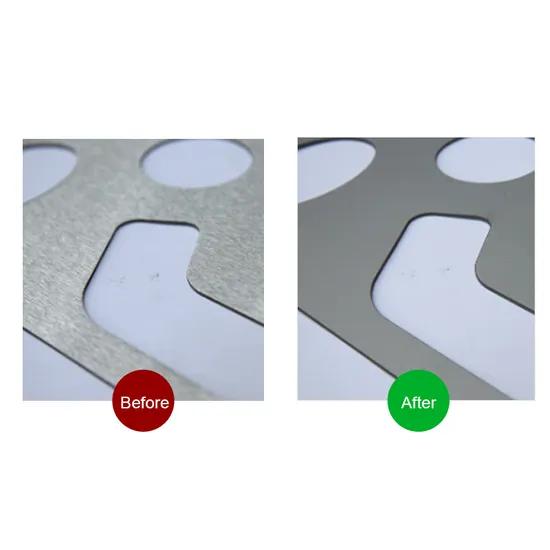
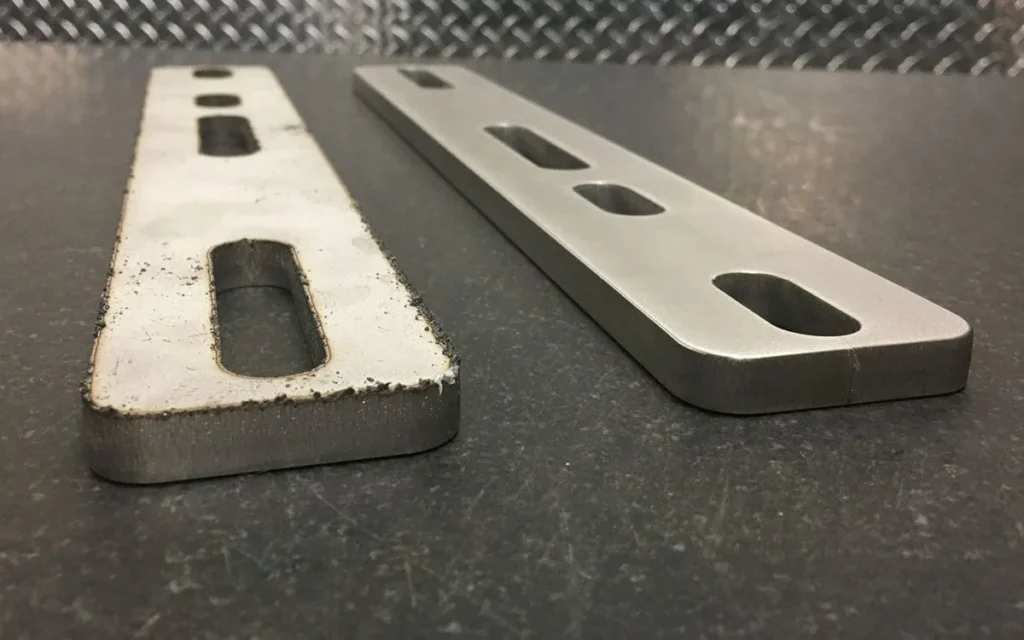
Recommended ALT text: metal deburring machine before and after edge rounding
Before deburring, parts may contain rough edges, cutting burrs or sharp corners. After processing, the objective is a smooth, consistent and safer edge.
What Materials Can a Metal Deburring Machine Process?
One advantage of industrial deburring equipment is its ability to process different materials.
Typical materials include:
| Material | Typical Application |
|---|---|
| Carbon Steel | Laser-cut structural and fabricated parts |
| Stainless Steel | Food equipment, machinery and decorative components |
| Aluminum | Lightweight industrial and precision components |
| Copper | Electrical and industrial parts |
| Galvanized Steel | Enclosures and fabricated sheet metal |
| Other Alloys | Application-dependent industrial components |
Machines currently offered for industrial sheet-metal finishing commonly support steel, stainless steel, aluminum, copper and other metals, although the abrasive configuration and operating parameters should be selected for the specific material.
Metal Deburring Machine for Laser Cut Parts
Laser cutting offers excellent precision and productivity, but secondary finishing may still be necessary.
A laser cut deburring machine can remove cutting burrs and sharp edges while preparing parts for downstream manufacturing.
For companies operating multiple laser cutting machines, manual grinding can become a bottleneck.
Instead of having workers grind each part individually, an automatic system allows operators to load multiple components onto a conveyor for continuous processing.
This makes a metal deburring machine for laser cut parts especially suitable for:
sheet metal fabrication shops, machinery manufacturers, electrical cabinet manufacturers, automotive component suppliers and contract metalworking companies.
Metal Deburring Machine vs. Manual Grinding
Manual grinding remains useful for prototypes, extremely large components or low-volume production.
However, production environments processing hundreds or thousands of sheet metal parts may benefit from automation.
| Manual Deburring | Automatic Metal Deburring Machine |
|---|---|
| Operator-dependent | More consistent processing |
| Suitable for low volume | Suitable for batch production |
| Higher manual workload | Reduced repetitive grinding |
| Difficult to maintain identical edges | Repeatable machine settings |
| One part at a time | Continuous conveyor processing |
| Simple initial setup | Better suited to production lines |
The correct choice ultimately depends on your production volume, part dimensions, burr condition and required finish.
How to Choose the Right Metal Deburring Machine
There is no single machine configuration suitable for every application.
Before purchasing a metal deburring machine, consider the following factors.
Material: Are you processing stainless steel, carbon steel, aluminum or multiple materials?
Maximum part width: Your largest component determines the required machine working width.
Part thickness: Confirm the minimum and maximum thickness your machine must process.
Burr type: Light laser burrs require a different configuration from heavy plasma or flame-cut slag.
Required edge radius: Determine whether you only need sharp-edge removal or a specific rounded edge.
Surface finish: Decide whether deburring alone is sufficient or whether you also need brushing, polishing or a directional finish.
Production capacity: High-volume production may justify a larger automatic conveyor machine.
A useful purchasing principle is to select the process heads according to the burr source and desired result rather than simply choosing the machine with the largest number of heads.
Frequently Asked Questions About Metal Deburring Machines
Can a metal deburring machine process stainless steel?
Yes. Many industrial stainless steel deburring machines are designed to remove burrs and round edges on stainless steel components.
Can one machine deburr and round edges?
Yes. Many automatic machines combine abrasive belts and rotary brushes so deburring and edge rounding can be completed in a single production process.
Can it process aluminum?
Yes, but the correct abrasive, machine configuration and dust-management system should be selected for aluminum processing. Aluminum dust requires particular attention to fire and dust safety.
What information should I provide before requesting a quotation?
For a more accurate machine recommendation, provide:
material + maximum part size + thickness + burr type + cutting process + required finish + expected production capacity.
Sending sample workpiece photos is also extremely helpful.
Find the Right Metal Deburring Machine for Your Application
Choosing the correct metal deburring machine can help manufacturers reduce repetitive manual finishing, improve edge consistency and prepare parts more efficiently for downstream operations.
Whether your parts are produced by laser cutting, punching, shearing or plasma cutting, the correct deburring and edge-rounding configuration should be selected according to your actual workpieces.
Looking for an automatic metal deburring machine?
Send us your material, workpiece dimensions, thickness, cutting method and deburring requirements. Our team can recommend a suitable machine configuration for your production needs.
CTA Button: REQUEST A QUOTE
Secondary CTA: SEND YOUR SAMPLE